Thursday, January 16, 2020

Isaiah 10

God always had a plan for the Jewish people -- He would reveal himself to them and they would spread that knowledge to the rest of the world. But he didn’t reveal how that plan would actually work until he spoke through Isaiah.

Isaiah made prophecies that were fulfilled by Jesus more than 700 years later. The reason that it took so long is that a lot had to happen in between. The nations of Judah and Israel were no different than their neighbors in Isaiah’s time, worshipping other gods and ignoring God’s commands as if they had never heard them at all. They had to be punished and reshaped into something that God could actually use.

One of the most important parts of the Old Testament is the way that it shows God working through history. It wasn’t just Israel. Every country had a role to play. He raised up a tool that he would use against His own people — Assyria. The Assyrians were the most powerful military force the world had seen at the time. They conquered Israel and brought Judah to the brink of destruction, leaving the Jewish people no choice but to depend on God:
Woe to the Assyrian, the rod of my anger, in whose hand is the club of my wrath. I send him against a godless nation, I dispatch him against a people who anger me, to seize loot and snatch plunder, and to trample them down like mud in the streets.  
 - Isaiah 10:5-6 
But the Assyrians had no concept of the Jewish God. They certainly didn’t believe in His power. So they looked at their military and political dominance and assumed that they were the ones responsible for it. They became proud and arrogant, believing their own myths because they were blind to the way the world actually worked. The same thing happens to any successful person or group of people who don't believe in God.

Faith in a higher power is the only thing that can keep people humble. The king of Assyria had nearly unlimited power. No country could stand in his way. No army could defeat him. Anything that he wanted, he could have. Why wouldn’t he think that he was a god?
When the Lord finished all his work against Mount Zion and Jerusalem, he will say, “I will punish the king of Assyria for the willful pride of his heart and the haughty look in his eyes.”  
For he says: “By the strength of my hand I have done this, and by my wisdom, because I have understanding. I removed the boundaries of nations, I plundered their treasures; like a mighty one I subdued their kings.”  
 - Isaiah 10:12-13 
Modern people who lack faith fall into the same trap. They take credit for their own success and develop an inflated opinion of themselves. There’s only one possible outcome once you start down that path. Their pride blinds them and they bite off more than you can chew.

Assyria was one of the first great empires in world history. But it certainly wasn’t the last. The same pattern repeats itself over and over — The more powerful they become, the more they lose any sense that there are limits to their power.

I’ve seen that first hand as an American citizen. Most US elections are portrayed as a battle of good and evil. The only question is which side is which. What gets lost are the underlying assumptions that both sides agree on. Every presidential candidate, whether Republican or Democrat, says that the US is the greatest and most powerful country in human history.


Maybe we are. But having that type of power should worry everyone. It’s not something to be proud of.

This is how Ezekiel, another Old Testament prophet who lived about 120 years after Isaiah, described Assyria:
Consider Assyria, once a cedar in Lebanon, with beautiful branches overshadowing the forest; it towered on high, its tops above the thick foliage. So it towered higher above all the trees of the field; its boughs increased and its branches grew long, spreading because of abundant waters. All the birds of the sky nested in its boughs; all the animals of the wild gave birth to its branches; all the great nations lived in its shade.  
- Ezekiel 29:3-7 
Does this not sound like America? The US has the biggest economy and military in the world. The amount of money the US spends on its military compared to every other country is staggering:


There are a couple of temptations when you have this much power. The obvious one is that there is no one who can prevent you from imposing your will on the world stage. The only restraints you have are the ones you put on yourself.

The more subtle temptation is believing that your power is a sign of your superior virtue and wisdom. After all, if you are that successful, you must be doing something right.

Americans know the second temptation well. All you have to do is look back at the invasion of Iraq. The US didn’t credit God as the source of our prosperity. We looked at our economic and military power and figured that it came because we had a superior form of government. The natural conclusion is that we needed to spread that government to the rest of the world. So we invaded another country to free them, which hasn’t exactly turned out well over the last 15 years.
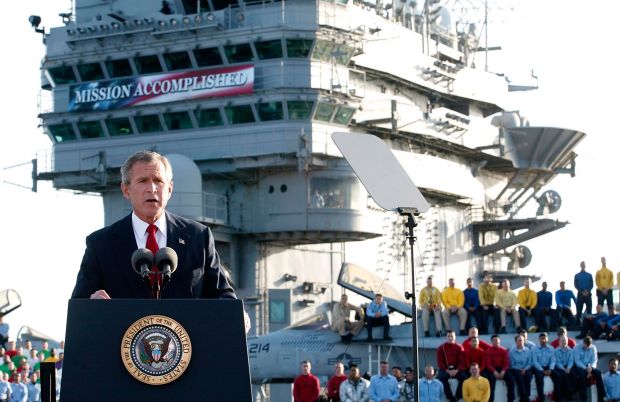

There aren’t many situations where a country operating on Biblical principles should be invading anyone. There’s nothing in the Bible about how Christian countries need to rule the world. If anything, it’s the opposite. The only mandate that Jesus gave his disciples was to go make more disciples. But they were supposed to do that on a personal level, not a political one. The idea was that they would create ministries like Jesus - traveling the world, investing in a few people at a time, and planting local churches wherever they went.

Both Peter (1 Peter 2:13-17) and Paul (Romans 13:1-7) urged their followers to stay out of politics. They didn’t want to destabilize governments. Their goal was to add more people to the church, not gain political power.

Nor was Israel ever supposed to be an empire in the Old Testament. Their political boundaries were firmly established. They were supposed to be a model for the world, not conquer it.

That was the lesson that Ezekiel drew from the collapse of the Assyrian Empire, which happened between Isaiah’s time and his own:
Therefore no other trees by the waters are ever to tower proudly on high, lifting their tops above the thick foliage. No other trees so well-watered are ever to reach such a height; they are all destined for death, for the earth below, among mortals who go down to the realm of the dead.

- Ezekiel 29:14 
There are a lot of warnings about the dangers of empires and nations who think too highly of themselves in the Old Testament. It always ends the same way.

It all comes back to first principles and how you view your place in the world. There are two ways to look at it. You can believe you are responsible for your own success. Or you can accept that God is ultimately in charge of your life.

One way leads to pride. The other leads to humility. Every person and country has to decide for themselves which path to follow.
Does the ax raise itself above the person who swings it, or the saw boast against the one who uses it? As if a rod were to wield the person who lifts it up, or a club brandish one who is not wood!  
 - Isaiah 10:14 

Tuesday, December 24, 2019

Isaiah 9

Isaiah wasn’t just sent to preach bad news. The prophet spends most of the first eight chapters of the Book of Isaiah warning about the coming judgment of God and the destruction of the nation of Judah.

But there was more to the story. God had a bigger plan for His people than giving them a small strip of land in the ancient Middle East:
For to us a child is born, to us a son is given, and the government will be on his shoulders. And he will be called Wonderful Counselor, Mighty God, Everlasting Father, Prince of Peace.

Of the greatness of his government and peace there will be no end. He will reign on David’s throne and over his kingdom, establishing it and upholding it with justice and righteousness from that time on and forever.

- Isaiah 9:6-7 
This is one of the most famous passages in the Bible. If you go to a church service around Christmas, you will hear it. Christians believe that Jesus fulfilled this prophecy made around 700 years before he was born.

Before we get into the specifics of the prophecy, it’s worthwhile to think about what Jesus accomplished in his short time on Earth. He wasn’t a mythical figure like King Arthur or Hercules. He was a real person who lived and breathed and walked among us.

How do we know this? It’s pretty simple — if Jesus didn’t exist, where did the first Christians come from?

We don’t need the New Testament to date the religion. We know from Roman historians that Christians were in the city in the 60s, and were persecuted after the Great Fire of 64. The first primary historical document from a non-Christian source that mentions the new faith was a letter written by Pliny the Younger, the Roman governor of Turkey, to the emperor Trajan in 112.


Jesus died in the 30s. It would not have been possible to found a religion based on someone who had never existed and say that his life occurred within the historical memory of the people listening.

The best way to understand this from a modern perspective is to look at the Mormon religion, which was founded by Joseph Smith in 1830. Imagine if he had never existed and people claiming to be Mormons had appeared in 2019 with a whole backstory they had made up. It wouldn’t make sense. Everyone would know the religion was founded in 2019 not 1830.

It would have been the same thing if these new Mormons had shown up in 1919 or 1869. People would have asked where they came from. No one needed to ask that question in 1830 because everyone already knew. Joseph Smith was gathering crowds around him to hear his new gospel. The people in those crowds became the first Mormons. And those people went out and converted others. That’s how religions start. There needs to be a critical mass at the beginning who actually heard from the founder and knew him personally. The pattern is the same whether it’s Jesus, Mohammed, or Joseph Smith.

There were plenty of critics of early Christianity in the Roman Empire. None said that Jesus was a myth. The most famous was a Roman philosopher named Celsus who wrote a long attack on the new religion in the 170s. He said that Jesus’ dad was actually a Roman soldier named Pantera. Celsus was trying to make an argument that people would actually believe. He wouldn’t say Jesus was made up anymore than a critic of Mormonism in 2019 would say that Joseph Smith was.


If everyone in that time, whether they were a Christian or not, accepted that Jesus was a real person, than we probably should too. From there, we don't even have to get into the supernatural stuff. Just looking at what he was able to accomplish as a flesh and blood human being is pretty amazing. He's by far the most influential person who ever lived. He's certainly the most famous.

But how? He wasn't a conqueror or a king or an artist or an athlete. He didn't actually do all that much. He wandered around a backwater province of the Roman Empire, gathered a small group of followers around him, and was killed. There have been countless people who did something similar and were quickly forgotten.

So what made Jesus special? The answer is pretty simple. The reason that he's still remembered today is because his followers said that he appeared to them after he died. It gave everything else that he said so much more weight because it meant that he wasn’t just another human. There was something else going on.

And it puts other parts of Isaiah’s prophecy in a new light:
For as in the days of Midian’s defeat, you have shattered the yoke that burdens them, the bar across their shoulders, the rod of the oppressors.

- Isaiah 9:4
None of us can know whether Jesus actually rose from the dead. We weren’t there when it happened (or didn’t). All we have is the word of the people who were. It wasn’t just his followers. One of their fiercest enemies — Saul of Tarsus — became a committed Christian after his encounter with the risen Christ.

But, if we take the resurrection on faith, it changes everything. Because then the implication of what Isaiah is saying is that the yoke that Jesus will shatter isn’t some foreign army. It’s death itself. That's how Jesus will reign on the throne of David for the rest of time. And while there is no throne that he currently rules from, the Christian church has been the most important mover in world affairs for the last 2,000 years. It's an awfully big coincidence.

Isaiah left other clues about who the Messiah would be. He didn't just say what that person will do. He also said where they will come from: 
In the past he humbled the land of Zebulun and the land of Naphtali, but in the future he will honor Galilee of the nations, by the Way of the Sea, beyond the Jordan — The people walking in darkness have seen a great light; on those living in the land of deep darkness a light has dawned.

— Isaiah 9:1-2 
Remember that backwater province of the Roman Empire? That was the same area that Isaiah was talking about -- a land humbled by the Assyrians. The northern Jewish kingdom of Israel, unlike the southern kingdom of Judah, was not saved by miraculous intervention.

It would see a different kind of miracle. A child would be born and a new light would dawn from there. And guess what? Jesus spent almost his entire ministry in the area around the Sea of Galilee, in the northern part of Israel. The coincidences are starting to add up.

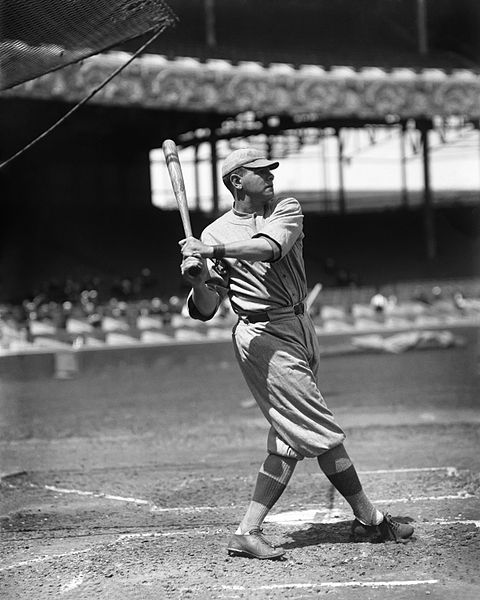
That is the real miracle of Christmas. It's not just that an unimportant person from an unimportant part of the world who died without a penny to his name would found the most influential religion in human history. It's that it was all predicted by a prophet almost 1,000 years beforehand. God called His own shot, just like Babe Ruth in the 1932 World Series.


Look at it backwards. Assume for a second that there is a Creator of the universe. And that He came down from heaven and took on the form of the creatures that He made. What would you expect would happen? You would probably expect that person to become the most influential and famous human being to ever live.

My favorite passage of the Bible is from the First Letter of John. John was one of the original 12 disciples. He was the only one who was at the cross and the one whom Jesus asked to look after his mother. In his letter, John writes to future audiences about his experiences:
That which was from the beginning, which we have heard, which we have seen with our own eyes, which we have looked at and which our hands have touched — this we proclaim concerning the Word of life.

The life appeared; we have seen and testify to it, and we proclaim to you the eternal life, which was with the Father and appeared to us.

We proclaim to you what we have seen and heard, so that you may also have fellowship with us. And our fellowship is with the Father and with his Son, Jesus Christ. We write this to make our joy complete.

- 1 John 1:1-4 
I love this passage because this is exactly what anyone would say if they were in John’s shoes. “I know this sounds crazy. I know you won’t believe this. But I was there. It actually happened. I saw this man with my own two eyes and I touched him with my two hands. This is real.”

When Isaiah wrote that someone from his small tribe would change the world, there was no reason for anyone outside of that tribe to believe it. But that is exactly what happened.

You have to ask yourself -- maybe Isaiah knew something. Maybe there's a greater purpose to everything that happens in this world. Maybe there is a God. And maybe, just maybe, He already came to Earth.

Merry Christmas!

Thursday, December 19, 2019

Isaiah 8

Isaiah preached during some of the darkest times in Judah’s history. Fifteen years after his ministry began, it was invaded by two larger northern neighbors -- Syria and Israel. And that was only the beginning.

In Chapter 7, Isaiah told King Ahaz not to fear the invasion. God would protect them. But Ahaz wouldn’t listen. Instead, even though Isaiah warned him against it, he reached out to Assyria for protection, a decision which would have disastrous consequences.

In Chapter 8, after Ahaz ignores him, Isaiah tells his countrymen how to respond to what was coming:
This is what the Lord says to me with his strong hand upon me, warning me not to follow the way of this people: ‘Do not call conspiracy everything this people call a conspiracy; do not fear what they do not fear, and do not dread it.’

- Isaiah 8:11-12 
There were two paths ahead of them, as things got worse. They could either fear Man or God.

Ahaz chose the first path. He panicked when he saw the armies of Syria and Israel. He thought he needed an ally who would even the odds. The obvious choice was Assyria.

Isaiah wanted his people to choose the second. He looked at the world like a game of Risk. The pieces on the board didn’t matter. There was an invisible hand controlling everything. Not even the armies of Assyria, the most powerful the world had ever seen, had any real power in the grand scheme of things. God could wipe them off the board with a flick of His wrist, which is exactly what He did in 701 BC. 


It all comes down to how you view the world. Most historians believe the outlines of the story told in the Book of Isaiah actually happened. There really were two invasions of Judah at the end of the eighth century BC, first by an alliance of Syria and Israel and then a much larger one by Assyria that reached the gates of Jerusalem. But then, right on the cusp of victory, thousands of their soldiers died suddenly without any explanation.

Isaiah saw the hand of God in the destruction of the Assyrian army. He said an angel of the Lord came down in the middle of the night and killed them. Historians have speculated that a plague might have swept through their camp.

Neither side is necessarily wrong. It’s not an either or question. Think of it this way -- wouldn't a plague be the simplest way for an angel to wreck an army in one night? There would be no way to tell the difference from the outside.

The same thing held true for the rise of the Assyrians. Maybe it was a matter of geopolitics, as a history book would say. Or maybe, like Isaiah said, they had been raised up by God to punish the Jewish kingdoms of Israel and Judah for their sins:
Because this people has rejected the gently flowing waters of Shiloah and rejoices over Rezin and the son of Remaliah, therefore the Lord is about to bring against them the mighty floodwaters of the Euphrates -- the king of Assyria with all his pomp. 


 -- Isaiah 8:6-7 
Once again, both interpretations could be true. Figuring out the right answer is not about having the right facts. It’s about the worldview that you use to interpret those facts.

Isaiah saw through the world through the prism of religion. But everyone, whether they are religious or not, has a worldview. Many turn to political parties and ideologies for a framework to understand the world around them. There are a lot of people who don’t explicitly choose a worldview — they go with some combination of what they were taught growing up and what the culture around them believes without thinking about it too much.

The bottom line is that every human being needs some type of filter to process reality. The universe is far too complicated to understand without one.

Every worldview is built on a set of fundamental assumptions about the nature of life. Philosophers call these ideas first principles.

The easiest way to understand how the process works is to go back to high school geometry. Euclidean geometry is built on five ideas (or postulates) about shapes in 2-dimensional space. The first four are fairly self-explanatory:
1. A straight line can be drawn between any two points.
2. It can be extended indefinitely and be straight.
3. In a segment of a straight line, a circle can be drawn with the segment as the radius and one endpoint as the center.
4. All right angles are identical. 
The reason they are called postulates is that you can't actually prove any of them. How do prove that a straight line can be drawn between two points? It just depends on how you define concepts like "straight" "line" and "point".

But, once you accept those postulates as true, you can use them to prove 28 increasingly complex theorems, all the with the same structure: "If A and B, then C, D, and E."

The postulates are the building blocks upon which everything else depends. Euclidean geometry is incredibly useful. Engineers still use it thousands of years after it was first discovered. But it all depends on a starting point of taking a few things on faith and then working your way up from there. If you remove the postulates as givens, the whole thing falls apart. They are the bottom level of the Jenga tower.


First principles, as the foundation of a worldview, work the same way. Most political and religious arguments ultimately come down to first principles. That's why two worldviews can reach the exact opposite conclusions from the same set of facts and both be logically consistent.

So the question becomes -- what first principles to accept? What things do we believe about the world simply on the basis of faith?

The first principle of Christianity is the resurrection of Jesus Christ. The basic facts about his life, just like the story told in the Book of Isaiah, are not disputed by most historians. They believe there really was an itinerant Jewish preacher named Jesus who lived 2,000 years ago in ancient Israel and was crucified by the Roman Empire. What no history book can tell you is whether he actually rose from the dead.

Christian theology is logically consistent. You can reason your way to every point of it — as long as you start from the premise of the resurrection. The problem is that it’s not something you can prove with any certainty. You just have to take it on faith:

For the message of the cross is foolishness to those who are perishing, but to us who are being saved it is the power of God. For it is written: “I will destroy the wisdom of the wise; the intelligence of the intelligent I will frustrate.”
Where is the wise person? Where is the teacher of the law? Where is the philosopher of this age? Has not God made foolish the wisdom of the world?

- 1 Corinthians 1:18-20
What the Apostle Paul is saying here is that God didn’t want the resurrection to be something that only smart people could figure out. The secret to understanding the universe isn't a secret at all. It's not the theory of relativity or some other piece of abstract knowledge. The resurrection is something that anyone, no matter how intelligent, can grasp.

Conversely, it doesn't matter how smart you are if you don't accept it. If you don’t take the resurrection on faith, than it becomes a stumbling block for you, preventing you from seeing the world as it really is. As Ghostface Killah said, there are a lot of smart dumb people out there.

Paul was echoing something that Isaiah wrote 700 years before. For him and his people, the stumbling block wasn't the resurrection. It was believing in God in the first place, and that He was in control of their affairs:

The Lord Almighty is the one you are to regard as holy, he is the one you are to fear, he is the one you are to dread. He will be a holy place; for both Israel and Judah he will be a stone that causes people to stumble and a rock that makes them fall. And for the people of Jerusalem he will be a trap and a snare.

- Isaiah 8:13 
Isaiah knew that most of his countrymen would fail that test, just like King Ahaz. They would be far more afraid of the Assyrians than He who sent them, which would cause them to make short-sighted decisions that would send their lives down the wrong path. That's the reality of the human experience. Most people will put their trust in what they can see than what they cannot.
“Enter through the narrow gate. For wide is the gate and broad is the road that leads to destruction, and many enter through it. But small is the gate and narrow the road that leads to life, and only a few find it.”

- Matthew 7:13-14 
Every believer since the beginning of time has walked the same path. What making a leap of faith comes down to is changing your first principles. It's a scary process that most people won’t do. All we can do is offer a hand and tell them that the leap isn’t as crazy as it seems. It only makes sense when you get to the other side.

Sunday, November 3, 2019

Isaiah 7

After opening with the siege of Jerusalem in 701 BC, Chapter 6 resets the Book of Isaiah more than 40 years to 743 BC, when the prophet is called to ministry. It then picks up 15 years later in Chapter 7, as the southern Jewish kingdom of Judah, ruled by King Ahaz, is invaded by the northern kingdom of Israel and neighboring Syria. 
Now the house of David was told, “Aram [Syria] has allied itself with Ephraim [Israel]”; so the hearts of Ahaz and his people were shaken, as the trees of the forest as shaken by the wind.

- Isaiah 7:2 
Ahaz and his people had good reason to be afraid. Judah and Israel had split around 200 years earlier, following the death of King Solomon. They were neighbors and rivals but still countrymen. Israel was much bigger, with 10 of the 12 tribes heading north in the split, leaving only the tribes of Judah (which the country was named for) and Benjamin in the south. Judah was already at a disadvantage in terms of size so an alliance between Israel and Syria threatened to completely upset the balance of power.


It’s hard to come up with a good analogy for what was happening. Imagine if the Confederacy had won the Civil War and then existed on uneasy terms with the Union for the next 200 years until a joint invasion between the US and Canada in the 2060s.

Isaiah had spent the 15 years between Chapters 6 and 7 preaching and prophesying throughout Judah. He had become a prominent enough figure to where he could give Ahaz advice:
Then the Lord said to Isaiah ... “Say to [Ahaz], ‘Be careful, keep calm, and don’t be afraid. Do not lose heart because of these two smoldering stubs of firewood -- because of the fierce anger of Rezin and Aram and the son of Remaliah.’”

- Isaiah 7:3-4
Ahaz is terrified by metaphorical smoke coming from Israel and Syria. God tells him not to fear. Their kings are just stubs of firewood that won’t burn for much longer. Their fire is already out.


But Ahaz cannot see through the smoke. All he sees is death and destruction headed his way so he desperately reaches out for any help he can find.

The next part of the story is told in a different book of the Old Testament, the second book of the Kings of Judah and Israel. The two books of Kings are broad historical outlines that condense hundreds of years into a few chapters. The books of the prophets are first-person stories set in the middle of those events. The book of Isaiah shows the prophet giving advice to Ahaz. Second Kings shows Ahaz ignoring him:
Ahaz sent messengers to Tiglath-Pileser king of Assyria, “I am your servant and vassal. Come up and save me out of the hand of the king of Aram and of the king of Israel, who are attacking me.”

And Ahaz took the silver and gold found in the temple of the Lord and in it the treasuries of the royal palace and sent it as a gift to the king of Assyria. The king of Assyria complied by attacking Damascus and capturing it. He deported its inhabitants to Kir and put Rezin to death.

- 2 Kings 16:7-9 
Ahaz turned to Assyria to protect Judah from Syria and Israel. It worked in the moment, but had catastrophic long-term consequences. Assyria was the biggest bully on the block in the ancient Middle East. The last thing that any country should have wanted was to insert Assyria into its affairs. Asking for help from the Assyrians was like asking for help from the mob in Goodfellas.


A couple years after conquering Syria, the Assyrians conquered Israel. Twenty years later, as we see in Isaiah 1, they were outside the walls of Jerusalem. Isaiah warned Ahaz about what would happen:
The Lord will bring upon you and your people and on the house of your father a time unlike any since Ephraim [Israel] broke away from Judah -- he will bring the king of Assyria.

In that day the Lord will whistle for flies from the Nile delta and for bees from the land of Assyria. They will all come and settle in the steep ravines and in the crevices of the rocks, on all the thorn bushes and at all the water holes. In that day the Lord will use a razor hired from beyond the Euphrates River -- the king of Assyria -- to shave your head and your private parts, and to cut off your beard as well.

- Isaiah 7:17-20 
Ahaz could not see how the actions he took to solve his current emergency would lay the seeds for a worse one down the road. His lack of foresight almost doomed his country. In that sense, he was no different than any other human leader. None of us can predict the future.

That is something that I've realized as I've gotten older. I'm 32, which means I'm old enough to remember almost 20 years of political debates. The things we were talking about 15-20 years ago are not the things we are talking about today. In relatively short amounts of time, the world changes in ways that are impossible to anticipate.

I was a high school senior in 2004. George W. Bush was running for re-election against John Kerry. The economy was still humming. Social media hadn’t been invented. The primary issue was the war in Iraq, which was still fairly popular at the time. Kerry wasn’t even running an anti-war campaign. His main argument was that he was more qualified to run the war because he was a Vietnam War hero and a longtime Senator with more foreign policy experience than Bush. Bush countered that Kerry was lying about his war record and that he didn’t have any consistent principles besides trying to win elections.


If you listen to the media, every election is the most important one of our lifetime. The funniest part about Time Magazine saying “the stakes could not be higher for the whole world” in Bush vs. Kerry is that the more important story from the perspective of 2019 was hidden away in the top right corner of the page.

So while the election of 2020 certainly feels like the most important election of our lifetime, that is how people felt in 2004, too.

Put away politics for a second. Does anyone, whether Republican or Democrat, think electing John Kerry in 2004 would have changed the course of the last 15 years? He wasn’t exactly an Old Testament prophet campaigning on the issues that would shape our country. He wasn’t warning about the the housing bubble or the broader collapse of societal trust that eventually lead to Trump. Few saw any of that coming. No one predicted the rise of social media and how it would fundamentally change our society.

It was the same thing 3,000 years ago. When Ahaz asked Tilgath-Pilaser for help in 727 BC, he had no way of knowing that Sennacherib would take over in 703 BC, beginning a military expansion that would let Assyria dominate the region and pose a far greater threat to Judah than the alliance of Israel and Syria.

Isaiah saw it coming. But that wasn't because he was smarter than anyone else. He was just listening to a higher power:
Now listen, you who say, “Today or tomorrow we will go this or that city, spend a year there, carry on business and make money.” Why, you do not even know what will happen tomorrow. What is your life? You are a mist that appears for a little while and then vanishes. Instead, you ought to say, “If it is the Lord’s will, we will live and do this or that.”

- James 4:13-15 
So what are we supposed to do in 2019? How do we make sense of what's going on in the world? Which decisions that we make today are really going to matter down the road? There are no prophets like Isaiah to give us answers. The ultimate function of the Old Testament prophets was to point to Jesus. And he’s already come.

We can’t see the big picture anymore than Ahaz. That's why the most important thing for believers to do over the next 12 months is to keep an even keel. You can’t despair if the election doesn’t go your way. Conversely, you can’t be too prideful if it does.

Maybe this is the most important election of our lifetimes. But maybe it isn't. There's no way to know. The only thing that I can predict is that, no matter what happens, they are going to tell us the 2024 election is the most important one of our lives, too.

The odds are that what's really going to matter in 2036 is something we aren't even considering in 2020. We have to give up control of our lives. Because the reality is that we never had any to begin with.
“Therefore I tell you, do not worry about your life, what you will eat or drink; or about your body, what you will wear. Is not life more than food, and the body more than clothes? Look at the birds of the air; they do not sow or reap or store away in barns, and yet your heavenly Father feeds them. Are you not much more valuable than they? Can any one of you by worrying add a single hour to your life?

And why do you worry about clothes? See how the flowers of the field grow. They do not labor or spin. Yet I tell you that not even Solomon in all his splendor was dressed like one of these. If that is how God clothes the grass of the field, which is here today and tomorrow is thrown into the fire, will he not much more clothe you -- you of little faith? So do not worry, saying, ‘What shall we eat?’ or ‘What shall we drink?’ or ‘What shall we wear?’ For the pagans run after these things, and your heavenly Father knows you need them. But seek first his kingdom and his righteousness, and all these things will be given to you as well. Therefore do not worry about tomorrow, for tomorrow will worry about itself. Each day has enough trouble of its own.”

- Matthew 6:25-34

Sunday, October 20, 2019

Isaiah 6

The Book of Isaiah opens at its climax, with the Jewish people looking doomed as the Assyrian army encircled Jerusalem. The first five chapters describe how things got to that point: The nation of Judah had turned away from God, and was being punished for its rebellion.

Chapter 6 resets the story to 743 BC, almost 40 years before the Assyrian invasion, when Isaiah has a life-changing spiritual encounter. The book never mentions what he was doing before. It doesn't matter because there is no way he could go back. What Isaiah describes sounds more like an HP Lovecraft novel than the Bible:
In the year that King Uzziah died, I saw the Lord, high and exalted, seated on a throne; and the train of his robe filled the temple. Above him were seraphim, each with six wings: With two wings they covered their faces, with two they covered their feet, and with two they were flying.

- Isaiah 6:1-2 
The seraphim cover their faces to avoid looking at God. One of the themes of the Old Testament is that most creatures can not directly experience the glory of God and survive. We are never actually told what He looks like. The idea of God as an old man with a white beard is something that modern audiences came up with. The Jews saw any depiction of God as leading to idol worship. Isaiah, in keeping with that tradition, doesn’t say anything about what he saw when he looked at the throne. He just talks about the scene around it.


Isaiah doesn’t feel worthy of being there. Being that close to the presence of God drives home how far he falls short of perfection. He knows his sin, and knows that God knows his sin. The only thing he can do is beg for forgiveness. What happens is pretty fascinating from a Christian perspective:
“Woe to me!” I cried. “I am ruined! For I am a man of unclean lips, and I live among a people of unclean lips, and my eyes have seen the King, the Lord Almighty.”

Then one of the seraphim flew to me with a live coal in his hand, which he had taken with tongs from the altar. With it he touched my mouth and said, “See, this has touched your lip; your guilt is taken away and your sin atoned for.”

- Isaiah 6:5-7 
Isaiah needs something to cover for his sin so an angel puts a coal on his lips. There’s a clear contrast between what happens to Isaiah in the Old Testament and what happens to the Apostle John in the Book of Revelation. John doesn’t need a heavenly coal to be in the presence of God. He has something better.

But that bit of theology is something I picked up as an adult. I first read Revelation as a teenager, long before I was a Christian. You don’t have to grow up in the church to be curious about it. There’s so much crazy stuff in there that it’s hard to know where to start -- the seven trumpets, the four horsemen, the scorpions with the faces of men. The whole thing seemed insane to me: How could Christians believe any of this? How could any modern person?

Believing in the supernatural was one of my biggest hurdles in becoming a Christian. I was raised in a family that believed in science, not religion. I couldn’t get my head around the idea that there anything more to life than the material world around us. The moment that changed came when I was rolling on ecstasy at an EDM concert. The drug opened my eyes to something new. Anyone who has rolled will know what I am talking about. You feel connected to everyone around you in a way that is hard to describe. You feel an overwhelming sense of love as your inhibitions and even your sense of self washes away.


I had rolled at EDM concerts before. What was different about this experience was that the mask from V for Vendetta was plastered on a screen that we were dancing in front of. I saw it and I just knew in my bones that something was wrong. I felt it leering and laughing at me.

Your brain normally protects you from stuff like that. That’s how people can go their entire lives without ever experiencing anything supernatural. But taking certain types of drugs lowers your spiritual boundaries. It's like a computer that gets connected to the internet without any anti-virus software. Ecstasy essentially turns off that part of your brain and leaves you open to anything. It’s great when you are in a positive place with positive people around you. But it can go real bad real fast if you are exposed to the wrong thing.

I lived a pretty reckless lifestyle in college and my early 20s. One thing you learn when you take psychedelic drugs is how different the world can look with a different filter on it. The human brain is designed to filter reality. Take the electromagnetic spectrum. Only a small fraction is actually visible to us:


Just because you can’t see X-rays, gamma rays, infrared light, and radio waves doesn’t mean they don’t exist. The question that you have to ask is whether the same thing could apply to the supernatural.
There are more things in heaven and earth, Horatio, than are dreamt of in your philosophy.

- Shakespeare 
Take this story from Kira Salak in National Geographic Adventure. She climbs a mountain in Libya that the locals tell her is haunted by demons and evil spirits. Nothing happens to her. A year later, she is in the Amazon jungles, going through an ayahuasca healing ceremony, when it suddenly turns into an exorcism:
And now they appear to be escaping en masse from my throat. I hear myself making otherworldly squealing and hissing sounds. Such high-pitched screeches that surely no human could ever make. All the while there is me, like a kind of witness, watching and listening in horror, feeling utterly helpless to stop it. All I know is that one after another, demonic-looking forms seem to be pulled from my body. I’ve read nothing about this sort of experience happening when taking ayahuasca. And now I see an image of a mountain in Libya—a supposedly haunted mountain that I climbed a year and a half ago, despite strong warnings from locals. A voice tells me that whatever is now leaving my body attached itself to me in that place. 
In the post-Christian West, we are raised to believe that this life is all there is. That there is nothing after death and that spiritual forces are a primitive superstition. Maybe we are wiser and more advanced than the overwhelming majority of societies throughout human history who believed otherwise. Or maybe we aren't. But just because you have never experienced something doesn't mean that it doesn't exist.

Most Western people believe in aliens despite there being zero proof of them whatsoever. One of the most famous problems in modern science is Fermi’s Paradox: How could there be no other signs of intelligent life in this impossibly vast universe with billions upon billions of stars?

Here’s one theory that fits the evidence. Maybe this universe was created for us specifically by a higher power. Maybe there is a guiding hand leading history to a specific end point. Maybe that power left evidence in the form of prophecies that predicted the most important event in human history hundreds of years before it happened.
Do you not know?
Have you not heard?
Has it not been told to you from the beginning?
Have you not understood since the earth was founded?
He sits enthroned above the circle of the earth, and its people are like grasshoppers.
He stretches out the heavens like a canopy, and spreads them out like a tent to live in.
He brings princes to naught and reduces the rules of this world to nothing.
No sooner are they planted,
No sooner are they sown,
No sooner do they take root in the ground,
Than he blows on them and they wither,
And a whirlwind sweeps them away like chaff.

- Isaiah 40:21-24 
The idea of an all-knowing and all-powerful God is hard to internalize. But it’s the only way that the teachings of Christianity make sense. Jesus tells us not to worry about anything and to love our enemies even as they persecute us. Those are impossible things to do under our own power. It only becomes possible if we really believe in God.

It was the same thing for Isaiah. His life after his encounter with God was hard. He wasn’t preaching the good news. He had to spread the bad news about the coming judgment of God to a people who had walked away from their faith and didn’t want to hear any of it. Isaiah had to face constant rejection and persecution. The only way for him to keep going was to remember that there was more to this life than what he was experiencing in the moment.

God is real. Once you experience that for yourself, nothing else matters.

Friday, September 27, 2019

Isaiah 5

In the first four chapters of the Book of Isaiah, the prophet lays out why the Assyrian army invading Judah was an instrument God was using to judge His people. There were spiritual undertones to the invasion. The Jewish people had walked away from their Creator and ignored His commands, and He was punishing them for their rebellion, just as He promised when He initially gave them the Promised Land.

It was a harsh punishment, which is why Isaiah made a point to remind his people about the goodness of God in spite of what was happening around them. To further illustrate that point, he introduces the parable of the vineyard. Like Jesus, he understood that people could see things more clearly when a new context was put around a familiar story:
I will sing for the one I love a song about his vineyard: My loved one had a vineyard on a fertile hillside. He dug it up and cleared it of stones and planted it with the choicest vines. He built a watchtower in it and cut out a winepress as well. Then he looked for a crop of good grapes, but it yielded only bad fruit.

- Isaiah 5:1-2 
As Isaiah goes on to explain, Judah is the vineyard, the Promised Land is the fertile hillside, and God is the one who planted it. The good grapes were righteousness, and the bad fruit was sin. God’s creation had gone bad so He was going to tear it up and start over:
Now I will tell you what I am going to do to my vineyard: I will take away its hedge, and it will be destroyed; I will break down its wall and it will be trampled.

- Isaiah 5:4 
The key to understanding this parable is to look it at from the point of view of the vines. Why should they have to produce good fruit? Don’t they have the right to do what they want? Who is God to tell them what is or is not bad fruit?

The answer to those questions is where Christianity conflicts with the way most Americans view the world. Our culture places a huge emphasis on independence. No one can tell us what to do or what to think. We determine the course of our own lives. Anthony Kennedy, the recently retired Supreme Court justice, summed it up in one of his most famous opinions:
At the heart of liberty is the right to define one's own concept of existence, of meaning, of the universe, and of the mystery of human life.
For the most part, God agrees with Kennedy. He doesn’t make us obey Him. He has given us the gift of free will. We are free to believe anything that we want about this world. The difference is that He doesn’t leave open the question of what the right answer is.

It comes back to first principles. If the universe is the product of random chance, and humans are nothing more than self-aware animals with the same value as any other creature on Earth, than there is no point to our brief existence other than what we make of it. Conversely, if the universe has a Creator, and human beings are created in His image, than the point of our lives is to know and experience Him. If you start with that belief, than good and evil are not things we can define for ourselves.
“Woe to those who quarrel with their Maker, those who are nothing but potsherds among the potsherds on the ground. Does the clay say to the potter, ‘What are you making?’ Does your work say, ‘The potter has no hands?’

This is what the Lord says -- the Holy One of Israel, and its Maker: Concerning the things to come, do you question me about my children, or give me orders about the work of my hands?

It is I who made the earth and created mankind on it. My own hands stretched out the heavens; I marshalled their starry hosts.

- Isaiah 45:9-12 
I have lived both sides of this question. I didn’t grow up as a Christian. My parents raised me in the Unitarian Universalist church. The UU church is the combination of two radical branches of the Protestant Revolution -- The Unitarians believed in the unity of God (i.e. not the Trinity and that therefore Jesus was just a human being) while the Universalists believed that God would save all of mankind regardless of whether or not they believed in Jesus. They eventually merged into a religion whose primary tenet is that we are free to believe anything as long as our beliefs don’t harm anyone else. It is a church for people who want church without religion.


We took comparative religion classes in Sunday School. The New York Times was our Bible. This was our version of the Lord’s Prayer:
Love is the doctrine of our church.
The quest for truth is its sacrament. [Emphasis added]
And service is its prayer.
To dwell together in peace.
To seek knowledge in freedom.
To serve humanity in fellowship.
Thus do we declare. 
The quest for truth is like the pursuit of happiness in the Declaration of Independence. The implication of searching for something is that you haven’t already found it. Just like the Founding Fathers couldn’t promise happiness to the citizens of their new nation, the UU church fathers didn’t promise truth to their parishioners.

In my experience, what happens when people are left to search for meaning in the world is that they find it other people. Everyone needs answers about themselves and their purpose in life. We all need to identify as something. Either we get that answer from a supernatural belief system or we look for one in the natural world. Without God, the best way to know how to think about myself is to see what other people think of me.

Here's the problem. If you get your identity from what other people think of you, then impressing those people becomes the most important thing in your life. The result is that nothing you do matters unless other people see you doing it:


Most Americans are Unitarian Universalists. They just don't know it. The actual religion, with its buildings, doctrines, and ministers, is a vestigial structure. (The classic example is the appendix, an organ that still exists within our bodies even though it no longer serves its original purpose.) That's the reason why only 12.5% of kids raised in the UU church stay in as adults. The religion already exists all around them. It is the default option in American life. Going on Sundays isn't necessary to believe in it.

The only way to actually leave is to opt out and join a different religion, one that gives answers about the world and about your own identity that exist outside of what other people think about you. In my experience, the most powerful part of becoming a Christian is learning that my identity comes God. I don’t have to impress anyone. I have value beyond my place in society. God loves me and died for me on the cross.

The flip side is that He decides what is right and wrong, not me. I don’t have all the answers. No Christian does. Those answers have been handed down to us for thousands of years. The choice that everyone is given in this life is to either believe in an objective Truth or go searching for a subjective one.
“You are a king, then!” said Pilate.

Jesus answered, “You say that I am a king. In fact, the reason I was born and came into the world is to testify to the truth. Everyone on the side of truth listens to me."

“What is truth?” retorted Pilate.

- John 18:33-34 
Just because you don’t believe in Good and Evil doesn’t mean those things don’t exist. That’s what Isaiah was trying to tell his people all those years ago. There is objectively good and bad fruit in this world. Go to a supermarket if you don’t believe me. No one is going to plant a vineyard and live with bad fruit forever. It may seem cruel to the vines to tear them out of the ground. But they were created for a reason.